
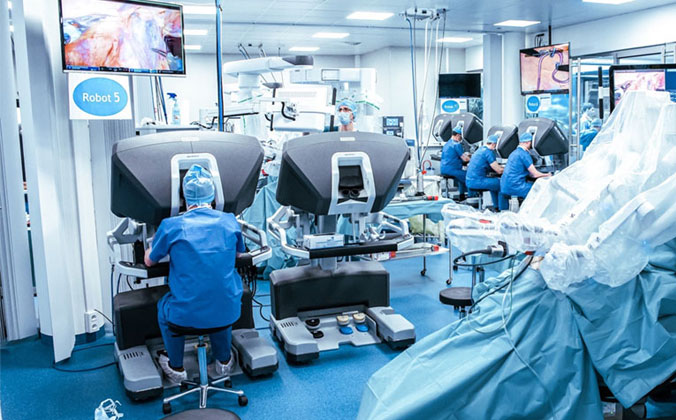
The field of urology is experiencing a profound transformation in 2025, driven by the convergence of artificial intelligence (AI), advanced imaging, and increasingly minimally invasive techniques. These innovations are fundamentally reshaping how urologic conditions—from cancer to incontinence—are diagnosed, treated, and managed, ushering in an era of more precise, accessible, and personalized patient care.
Advanced Diagnostics and Imaging: The AI-Enhanced Eye
Diagnostics are becoming faster, more accurate, and less invasive, largely due to the integration of AI with advanced imaging technology.
Micro-Ultrasound (MicroUS) for Prostate Cancer: MicroUS is emerging as a potential game-changer, offering an accessible, real-time alternative or complement to MRI-fusion biopsy for detecting clinically significant prostate cancer. Clinical trials presented in 2025 have shown it to be non-inferior to the MRI-driven pathway in detection rates in selected patients, positioning it as an efficient tool, especially in settings with limited MRI access.
AI-Powered Image Analysis: AI is being integrated into imaging workflows to enhance the accuracy of cancer and kidney stone diagnostics. These systems can analyze imaging data with exceptional speed and precision, flagging subtle abnormalities that might be missed by the human eye, thus leading to earlier and more confident diagnoses.
Novel Urine-Based Biomarkers: Research is advancing on non-invasive urine tests for conditions such as recurrent kidney cancer, offering a promising, patient-friendly approach to early detection and monitoring.
Robotics and Minimally Invasive Surgery (MIS)
Robotic surgery, already a staple in urology, is seeing major advancements, while new non-surgical devices are simplifying care for benign conditions.
Next-Generation Robotic Platforms: New multi-port and single-port robotic systems are entering the market, increasing competition and potentially lowering costs, potentially broadening the accessibility of robotic surgery globally. Furthermore, the push for haptic feedback (the sense of touch) in newer systems aims to close the sensory gap for surgeons, enhancing control and safety during complex procedures.
Autonomous Robotics and Guidance: The integration of AI and augmented reality (AR) into robotic surgery is making procedures like partial nephrectomy (kidney-sparing surgery) more precise. AR overlays 3D-reconstructed images of a patient’s anatomy, providing real-time guidance on tumor location and vascular structures.
Innovation in BPH Treatment: Minimally Invasive Surgical Techniques (MISTs) for Benign Prostatic Hyperplasia (BPH) continue to advance. Technologies like the robot-assisted Aquablation technique use a high-velocity water jet under real-time ultrasound guidance to precisely remove prostate tissue, aiming to reduce side effects like sexual dysfunction.
New Therapeutic and Implantable Devices
Innovations are bringing sophisticated, less invasive treatment options for conditions that significantly impact patient quality of life.
Electronic Artificial Urinary Sphincters (eAUS): For severe urinary incontinence, particularly after prostate surgery, new electronic or myoelectromechanical artificial urinary sphincters, such as the UroActive system, are under development. These smart implants use electronic control for personalized pressure regulation, potentially offering a more user-friendly and convenient alternative to traditional mechanical devices.
Targeted Cancer Therapies: The FDA approval of new delivery systems, such as a gemcitabine intravesical system for BCG-unresponsive non–muscle invasive bladder cancer (NMIBC), offers a significant new option for patients with high-risk disease. Another key development is the approval of a subcutaneous injection formulation of the immunotherapy drug pembrolizumab for solid tumors, which offers noninferior efficacy with reduced treatment time compared to the intravenous form.
Next-Generation Neuromodulation: Advances like miniaturized, battery-free implantable tibial neuromodulation devices are being approved for conditions like urge urinary incontinence, offering less invasive and more appealing options for patients.
The Future is Personalized and Connected
The overall trend in 2025 is a shift towards precision-based care. This approach tailors diagnosis and treatment to the individual patient, moving away from a one-size-fits-all model. Alongside this, digital health and remote monitoring systems are being developed, such as wearable sensory devices (e.g., “sensory t-shirts”) to monitor vital signs post-surgery, facilitating earlier, safer discharge and better home recovery management. Urology is rapidly becoming a high-tech, digitally integrated speciality focused on maximizing both clinical outcomes and patient quality of life.